The Counterintuitive Result
What an AI Art Company Learned From Half a Million Tiny Dolphins

A few weeks ago, I was telling someone about Victoria’s Secret.
Not because I have any particular interest in lingerie compared to the next guy, but because their stock had just jumped nearly 50% in a single DAY, and the reason was so bizarre, so perfectly illogical, that I could not stop thinking about it.
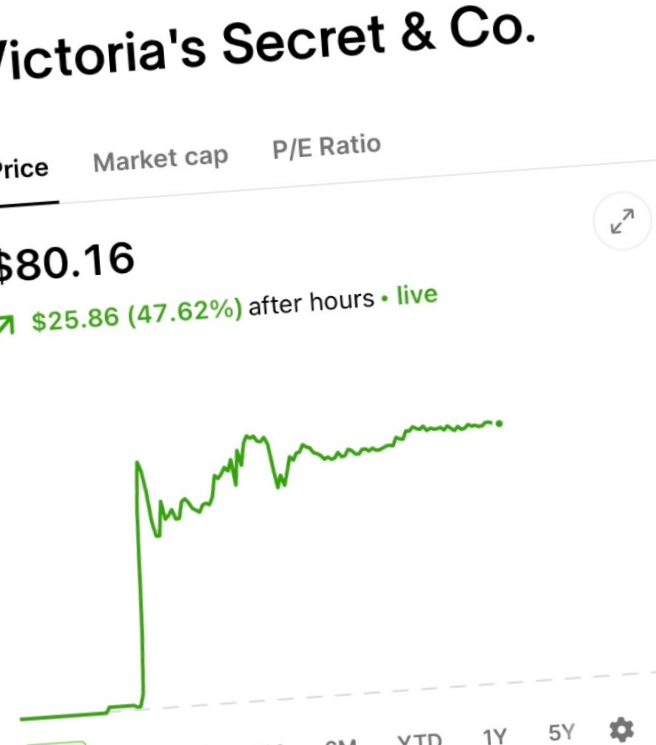
The reason, or at least the prevailing interpretation, was Semaglutide. Weight loss drugs. What in the olden days of marketing, we used to call Reduction. Thanks to Ozempic, millions of people are losing weight, and those who lose weight need new clothes, including those sold by Victoria’s Secret. The causal chain, once you see it, is almost embarrassingly simple: pharmaceutical innovation leads to body transformation, leads to wardrobe replacement, leads to confidence, leads to lingerie sales, leads to a stock price that behaves as though someone discovered oil under the fitting rooms.
In hindsight, it is wildly rational. Ozempic was not in Victoria’s Secret’s competitive landscape. Weight loss drugs were not a factor in their investment model. And yet here we are, watching a lingerie company reap the rewards of a pharmaceutical revolution that had nothing to do with lingerie.
Bear with me…this is not about lingerie or dolphins, but speaking of dolphins:
Half a Million Tiny Dolphins
Two weeks ago, Midjourney, the company that taught an entire generation to type a sentence and receive a painting, announced that it is building a full-body medical scanner.
Let me say that again, because the sentence resists belief the first time through, and I need to write it again myself because it seems unreal.
Midjourney, the AI image generator, the company that produces fantasy landscapes and cinematic portraits, and the occasional unsettling six-fingered hand, announced that it is developing a machine that will scan your entire body in sixty seconds using ultrasonic waves and water, producing images comparable to an MRI at a fraction of the time and cost. They compared their half-million tiny sensors to dolphins using echolocation, a kind of analogy that sounds whimsical until you realize they are completely serious.
They are also opening spas, which, as a MarTech company specializing in health & wellness, brings them directly into my area of expertise and now gives me the authority to speak on the subject.
The first spa, the Midjourney Spa, which will apparently feature hot tubs, cold plunges, and saunas alongside the scanning technology, is planned for San Francisco by the end of next year. By 2031, they aim to have 50,000 scanners worldwide, performing 1 billion scans per month.
From a Martech perspective, that ambition is either visionary or delusional, and I have been in this industry long enough to know that the distance between those two things is often narrow.
The internet reacted the way it does to everything unexpected: with confusion, skepticism, excitement, and memes. What nobody seemed to ask, or at least, nobody whose opinion reached me, was the question that I found most interesting.
Not: Will this work?
But: Why is an AI art company the one building it?
The Thing You Learn is Never the Thing You Think You’re Learning
I have a theory about this. It is informed less by my understanding of medical imaging, which is negligible, than by my experience running a company that has spent years building technology for the category and the last year building an internal AI tool that we will almost certainly never sell.
That AI is called Anton. It is an AI assistant deployed within our organization in Slack, connected to our knowledge base and trained on our processes and preferences. We built it because we believed, correctly, that an AI tool tailored to our specific operations would create meaningful efficiencies. And it has. The team uses it. It works. It is, by any reasonable standard, a success.
It is also not the point.
The point, the thing I did not understand when we started, is that the value of building Anton was never Anton. The value was what our team learned while building it. How to think about AI deployment. How to write prompts that produce useful outputs. How to recognize when a tool is solving the right problem and when it is solving the wrong problem efficiently. How to understand the gap between what an AI produces and what a client actually needs to see. These are not things you can teach in a workshop. They are things you learn by doing, by failing, by watching someone present a deck that was entirely generated by an AI assistant without the twenty percent of human polish that would have made it credible, and then figuring out how to prevent that from happening again.
Anton will probably never compete with Zapier Brain, Ramp, or the 15 Y Combinator-funded startups building the same category with 10 (100?) times our resources. That used to bother me. But it no longer bothers me. Because Anton was never the product. Anton was in the gym. The muscles we built there are the product, and now they are being applied to problems that Anton could never solve.
I think Midjourney did the same thing, but on a scale that makes my experience look like a science fair project.
From Cat Pictures to Body Scans
What does an AI image generation company actually know how to do? If you answer “generate images,” you are correct but superficial, in the way that saying a Formula One team “drives cars” is correct but misses the engineering.
What Midjourney knows how to do, what it has spent four years and hundreds of millions of dollars in revenue learning how to do, is reconstruct coherent visual information from massive, noisy datasets. It takes a text prompt (which is noise, from a computational perspective) and produces an image (which is signal). It does this by processing enormous volumes of data, identifying patterns within it, and distilling those patterns into something a human can look at and understand.
Now consider what a full-body ultrasonic scanner does. It blasts half a million sensors’ worth of sound waves at a human body, collects terabytes of reflected data per second, and must resolve that data into a three-dimensional image that a medical professional can interpret. The computational problem differs in its specifics and is nearly identical in its structure. The muscle is the same muscle. The gym just changed.
This is the counterintuitive result. The expected outcome of an AI image company would be better images, higher resolution, faster rendering, maybe video, maybe 3D environments. The unexpected outcome is that the capability they built to generate dragon pictures turns out to be structurally similar to the capability required to look inside the human body. Nobody predicted this because nobody thinks about capabilities in the abstract. We think about products. And products are just capabilities wearing a costume.
The SPA is Not a SPA
Midjourney did not announce a medical device or a clinical facility. They announced a spa. With hot tubs. And cold plunges. And golden light. And scanning that happens almost as an afterthought, something that occurs while you are relaxing, something you barely notice, something that accumulates a library of health data about your body as a side effect of having a pleasant afternoon.

This is not a design choice. It is a strategy. And it is, if I may use a word that has been on my mind lately, an act of verisimilitude, the appearance of truth, which, in marketing terms, is also the idea that the appearance of a thing matters as much as, and sometimes more than, the thing itself. The scan is the product. The spa is what legitimizes both that product and all the images that, let’s face it, Midjourney “borrows” whenever you need to create a flyer with you riding a dolphin or whatever. And the presentation is what determines whether anyone actually shows up to be scanned.
Midjourney could have announced a clinical imaging device and placed it in hospitals. The technology would be the same. The data would be identical. But the experience would be a medical procedure, cold rooms, paper gowns, and the particular anxiety that accompanies any encounter with diagnostic equipment. People avoid MRIs. People avoid doctors. People do not avoid spas.
By wrapping the technology in an experience that my clients provide every day, what people actually want, Midjourney solved a problem that has nothing to do with computational imaging and everything to do with human psychology: how do you get a billion people to voluntarily submit to regular full-body scans? You do not improve the scan. You make the context better. You make people forget they are being scanned at all.
What I am trying to say is that the technology is rarely the barrier to adoption. The experience is the barrier to adoption.
The best product in the wrong context will fail. A good product in the right context will change the world, or at least get people through the door, which is the necessary precondition for changing anything.
What This Means for You
The most valuable thing you are building right now is probably not the thing you think it is. The AI tool you are experimenting with, even if it never becomes a product, is teaching your team how to think in ways that will matter long after the tool itself is obsolete. The capability is the asset. The product is temporary.
And the way you present that capability, the experience you wrap it in, the context you place it in, the care you take with the fonts and the formatting, and the first impression, that is the difference between a technology that people adopt and a technology that people admire from a distance and never use.
Midjourney made an AI art tool. Then they used what they learned to build a medical scanner. Then they wrapped the medical scanner in a spa.
The counterintuitive result is rarely as counterintuitive as it seems. It just requires looking at what you have built and asking What is this? But what did building this teach me to do?
The answer might surprise you. It certainly surprised the internet.
Ashley Heron
Managing Director, CommaEight